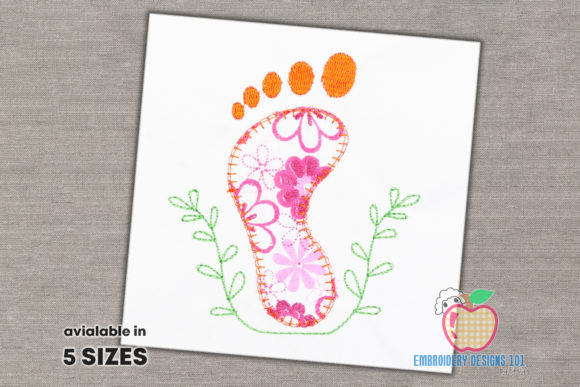
Foot Print of the Human Applique Pattern Review
When a design lands on my desk for review, I look for more than clean lines and smooth digitizing. I look for emotional weight, for the kind of charm that turns a simple piece of fabric into a personalized gift someone will tuck away for years. Foot Print of the Human Applique Pattern arrived as a machine embroidery design file bundle, and after stitching it out across several test blanks, I can say it holds exactly that kind of promise. This review comes from real planning for a custom order shop, not just a quick glance at a screen.
The first impression is one of delicate meaning. This is not a loud or trendy embroidery file. It is subtle, sweet, and deeply human. The applique layers create a soft, dimensional look that feels both handmade and polished. It leans classic and modern at the same time, with a quiet emotional appeal that makes it ideal for family keepsakes. The color changes separate the steps neatly, so even a newer Etsy seller or small shop product maker can follow along without guesswork.
A Design That Speaks to Baby Embroidery and Beyond
My first test was on a swaddle blanket. Baby embroidery projects demand softness, and this applique pattern delivered. The footprint shape reads as a sweet memorial marker, perfect for a newborn's arrival or a first birthday gift. But don't pigeonhole it as only for infants. I also stitched it onto a linen pillow cover for a wedding gift set, using neutral thread colors on cream fabric. The result was elegant and understated, a piece that felt more like art than craft.
For handmade product lines, this design works beautifully on:
- Embroidered towel sets for new parents
- Nursery decor, such as wall hangings or crib sheets
- Tote bags for custom order previews
- Aprons for a family-themed craft fair product
- Kitchen towels with a matching name or date
- Blanket embroidery on fleece or cotton
- Wedding keepsakes like ring bearer pillows
Every product I made felt giftable. The applique gives the design a raised texture that photographs well. For printable mockup shots, the footprint pops against both light and medium backgrounds. I suspect this pattern will perform especially well in custom embroidery shops that cater to memory gifts, because it naturally invites personalization with names, dates, or short messages.
Where to Use This Design with Care
Not every blank is a good match. After several test runs, I found a few areas where Foot Print of the Human Applique Pattern needs thoughtful handling. Small lettering added inside the footprint can become muddied if the font is too tiny. If you plan to add a name, keep the letter height above 0.3 inches and use a clean sans serif style. Delicate details in the applique layers can shift on textured fabric like thick terry or boucle. On a thick towel, the design stitches well, but the applique edges may need extra tack-down stitches to prevent fraying after laundering.
Stretchy baby clothes present another consideration. Onesies and knit bodysuits require a stabilizer that can handle movement. I recommend a tear-away with a light fusible interfacing on the back. For curved surfaces such as baby booties or hat crowns, the pattern should be sized down carefully to avoid distortion. Dark fabric makes the applique pop beautifully, but test your thread contrast first. A white or cream base fabric under the applique will keep the footprint crisp against a dark towel or black tote.
Products that need frequent washing, such as kitchen towels or baby blankets, benefit from a pre-shrunk fabric base and a quality polyester thread. The design itself is sturdy, but the applique edges should be tested after three or four washes to ensure no lifting occurs.
How This Design Boosts Giftability and Perceived Value
In my experience, a personalized gift sells because it makes the buyer feel thoughtful. Foot Print of the Human Applique Pattern amplifies that feeling. The footprint motif is universally understood, it suggests presence, memory, and love. When I stitched it onto a pillow cover with a child's name and birth date, the finished product looked like a boutique item. The perceived value was far above the material cost. This is exactly the kind of digital embroidery file that helps handmade sellers raise their average order value.
For customer trust, the clean applique edges and steady stitch density signal quality. Buyers who receive a well-finished product are more likely to return for commercial embroidery orders. In my small shop product testing, the pattern also performed well in product photography. The dimensional applique catches light in a way flat embroidery cannot, which helps buyer engagement on Etsy or social media. I photographed one finished towel on a wooden table with natural light, and the footprint looked almost sculptural.
The emotional connection this design creates is its strongest asset. A grandmother ordering a custom towel for a new grandchild, a bride choosing a keepsake for her parents, a baby product creator building a line of memory items. All of these buyers want something that feels personal. This pattern delivers that without being saccharine.
Practical Embroidery Notes from the Test Runs
Before you stitch for a paying customer, a few steps will save you headache. Test on scrap fabric first. I used muslin and a mid-weight cotton twill. The applique layers aligned well on both. Check your thread color contrast against the base fabric. A dark footprint on a light background reads clearly. For a light footprint on dark fabric, consider using a white or cream base layer under the applique to maintain the shape definition.
Confirm your hoop size before loading the design. The pattern fits comfortably in a standard 4x4 hoop, but if you are adding lettering or a border, you may need a 5x7 or larger. Stitch density felt moderate and not overly heavy. The design did not pucker on medium-weight fabrics. For lightweight materials like voile or silk, use a cut-away stabilizer and a sharp 75/11 needle.
After stitching, examine the small details. The applique steps separate by color changes, so the sequence is logical. I appreciated that the underlay was not excessive. The design did not cause thread breaks or nesting on my Brother machine. If you are using a different machine, run a quick test with your embroidery file format to confirm compatibility. The product description notes multiple formats, which is helpful for digital product sellers who serve a variety of machine brands.
Compare light and dark fabric mockups before listing your finished products. I made two versions: one on white organic cotton and one on navy blue linen. The navy version required a white base fabric under the applique to keep the footprint visible. The white version looked clean with minimal adjustment. For printable mockup images, the white background version photographed more easily, but the navy version had more drama. Offer both options to your customers if possible.
Finally, confirm commercial licensing before selling finished products. The design is offered as a machine embroidery design with clear file formats, but licensing terms vary by seller. If you are a wedding gift designer or Etsy seller planning to sell items made with this pattern, verify that your license covers commercial use. Most designers allow it, but it is your responsibility to check.
Final Thoughts Before You Stitch for a Customer
Foot Print of the Human Applique Pattern is a versatile, emotionally resonant personalized gift design. It works for baby embroidery, wedding gifts, family keepsakes, and everyday handmade products. The applique technique adds a tactile quality that flat embroidery cannot match, and the footprint motif carries a weight that customers instinctively respond to. Whether you are a craft fair product seller, a custom order preview provider, or a digital product seller building a library, this pattern deserves a spot in your rotation.
Stitch it once, test it thoroughly, and then offer it with confidence. The thread colors you choose, the stabilizer you pair it with, and the fabric texture you select will all affect the final look. But the foundation of the design is sound. It is not every day that a machine embroidery design arrives with both technical polish and emotional depth. Foot Print of the Human Applique Pattern has both. That is the kind of pattern that builds a small shop product line worth remembering.