Little Girl in a Heart: A Designer's Honest Take
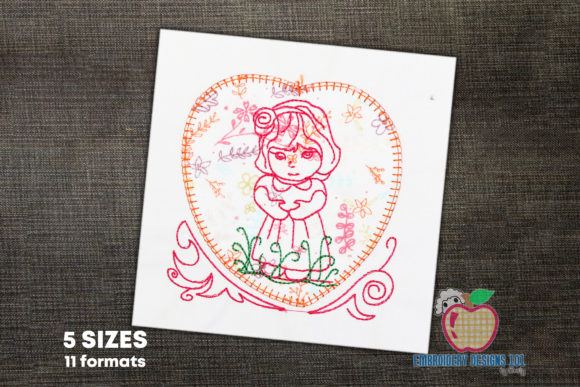
When I first opened the Little Girl in a Heart embroidery file, I was immediately struck by how thoughtfully it balances sentiment with structure. This is not the kind of overly cutesy design that looks charming on screen but falls apart after a few washes. It has a quiet sweetness—a silhouette of a little girl nestled inside a heart shape—that feels both timeless and appropriate for a range of handmade products. As someone who has stitched hundreds of applique designs for clients and my own small shop, I know that what works in a preview does not always work on fabric. So I put this machine embroidery design through the kind of real-world testing that matters to designers, makers, and small business owners.
First Impressions: Mood, Shape, and Visual Personality
The heart shape is generous and well-proportioned, which immediately tells me this design was drafted with applique logic in mind. The little girl figure inside is simple enough to read clearly at a distance, yet it has enough detail to feel complete. The mood is gentle, affectionate, and slightly nostalgic—perfect for Valentine's Day projects, but not so narrowly themed that it only works for February. I could easily see this on a birthday gift, a welcome-home project, or a piece celebrating a daughter or granddaughter. The visual personality leans classic rather than trendy, which means the design has staying power for both personal gifts and commercial inventory.
From a layout perspective, the composition is centered and balanced. The heart creates a natural frame, so the design feels self-contained and easy to place on any product. This matters more than many new embroiderers realize—a well-framed design saves time on positioning and reduces placement errors. For anyone selling finished products, that consistency translates directly into faster production and fewer mis-stitched items.
Real Performance on Apparel and Accessories
I tested the Little Girl in a Heart machine embroidery design on several common substrates to see how it really behaves. On a medium-weight cotton sweatshirt, the satin stitch along the heart edge laid down cleanly with minimal pull. The fill stitches in the girl's dress and hair settled nicely into the fabric without puckering, which I credit to reasonable stitch density. On a sturdy tote bag made from canvas, the design had a satisfying heft and presence—exactly the kind of result that makes customers feel they have received a premium handmade product.
I also stitched it on a baby onesie using a lightweight stabilizer and a small hoop. This is where many applique designs get dicey, but the Little Girl in a Heart held its shape well. The heart outline remained crisp, and the inner details did not distort on the stretchy knit. For anyone who makes personalized baby gifts or boutique children's apparel, this design is a strong contender. It also worked beautifully as an embroidered patch, which I tested on felt with a layer of tear-away stabilizer. The patch came out clean enough to sell as a standalone item, which opens up options for craft fair merchandise and pinback accessories.
On a cap, however, I would caution against using a hoop size that crowds the design. The heart shape requires enough room to keep the curves smooth, and on a curved cap surface, smaller hoops can cause the satin stitch to gap at the edges. If you plan to stitch this on hats, test it first with a firm cutaway stabilizer and consider sizing the design down slightly to fit the cap front comfortably.
Where to Use This Design Carefully
No design is perfect for every surface, and being honest about limitations is part of running a trustworthy craft business. With Little Girl in a Heart, I noticed that very thin or loosely woven fabrics can be tricky. The applique layers and satin stitches add weight, and on a delicate silk blouse or a sheer cotton voile, the design may pull the fabric out of shape. If you are working with lightweight material, use a water-soluble stabilizer on top and a medium-weight cutaway underneath. That sandwich approach keeps the stitches clean without distorting the garment.
Dark fabrics also require attention. The design relies on color contrast between the heart, the girl, and the background. On black or deep navy, you will want to choose thread colors that pop—bright pinks, reds, or whites for the heart, and a lighter skin tone for the girl. A quick black-and-white mockup of the design before stitching can save you from discovering poor contrast halfway through a run of custom apparel. I always recommend printing a grayscale version of the embroidery file and holding it against your chosen fabric. If the shapes blur together at arm's length, adjust your thread palette.
Dense stitch areas are minimal in this design, which is a plus for products that need frequent washing, like kitchen towels, reusable shopping bags, or children's clothing. The applique layers reduce overall stitch count compared to a fully filled design, and the satin stitches are confined to the heart outline and a few accent lines. This means fewer thread breaks and less risk of the design fraying over time. For anyone selling to customers who expect durability, that is a meaningful advantage.
Visual Appeal and Product Value
When I look at a design for commercial use, I ask myself two questions: Does it photograph well, and does it make the finished product feel like a gift worth paying for? The Little Girl in a Heart embroidery design scores well on both counts. The heart shape is instantly recognizable and emotionally resonant, which matters for Etsy listings and craft fair tables where customers make split-second decisions. In photos, the design reads clearly even at thumbnail size, which helps with click-through rates on digital marketplaces.
For small shop owners who create printable mockups or digital product previews, this design also works well as a hero element. The clean silhouette and balanced proportions mean it can be centered on a sweatshirt, tote bag, or pillow cover without competing with other design elements. It adds perceived value to any product it goes on—a plain tote becomes a thoughtful gift, a simple apron becomes a boutique item, a basic sweatshirt becomes a sentimental keepsake. That kind of visual lift is hard to engineer, but this design delivers it naturally.
From a brand consistency perspective, the design has a specific but not narrow audience. It fits perfectly into a shop that specializes in personalized kids' gifts, family-themed apparel, or sentimental home decor. I would not recommend it for a shop that focuses strictly on modern minimalist or edgy styles, but for anyone serving parents, grandparents, or gift shoppers looking for something heartfelt, it is a reliable addition to the product lineup.
Practical Designer Notes Before You Stitch
Before you load this digital embroidery file into your machine and start production, take these steps. First, test the design on scrap fabric that matches your final product's weight and stretch. Do not skip this—even experienced designers can be surprised by how a design behaves on a new substrate. Second, check your thread color contrast by viewing the design in both a color mockup and a grayscale print. If the heart and the girl blend together, adjust your palette. Third, confirm your hoop size is appropriate for the design dimensions. The Little Girl in a Heart comes with multiple embroidery file formats and works with multiple machines, but you need to verify the sizing against your specific hoop. If the design is too large for a small hoop, the satin stitches may gap at the curves.
Also review the stitch density for your chosen fabric. On dense fabrics like denim or twill, the design will stitch smoothly with a medium-weight stabilizer. On knits or fleece, use a cutaway stabilizer and consider a light topping sheet to prevent the stitches from sinking into the nap. For patches, felt or wool blend with a tear-away stabilizer gives excellent results. And always check the licensing terms before selling finished items or digital products. The design description states that steps are separated by color change, which is a sign of thoughtful digitizing, but you must confirm whether commercial use is permitted under your specific license agreement.
Final Thoughts for Makers and Sellers
The Little Girl in a Heart is a solid, professional-grade applique design that performs well on a range of projects. It is not a novelty design that will fade from popularity after one season—it has the kind of emotional resonance that keeps customers coming back for personalized gifts and boutique apparel. Whether you are stitching a one-of-a-kind tote for a grandparent, a batch of custom sweatshirts for an Etsy drop, or a set of embroidered pillows for a craft fair, this design holds up to real use. It gives you a finished product that looks intentional, stitches cleanly, and makes the recipient feel seen. For any designer or small business owner building a catalog of reliable, heartfelt embroidery assets, this one earns its place in the rotation.